27 Jul 2026
Mapping Algorithmic Adjustments in Bonus Round Frequencies Across Worldwide Digital Gaming Ecosystems

Digital gaming operators adjust bonus round frequencies through algorithmic systems that respond to regulatory requirements, player data patterns, and regional market conditions across multiple continents. These adjustments occur in real time as platforms collect performance metrics from millions of sessions each day, and developers fine-tune random number generators to maintain compliance while meeting revenue targets in different jurisdictions.
Regional Regulatory Influences on Algorithm Parameters
Regulatory bodies in North America, Europe, and Asia Pacific issue guidelines that directly affect how often bonus rounds appear in slot titles. In July 2026 data releases from several markets showed operators recalibrating trigger rates after new reporting standards took effect in Ontario and Pennsylvania, where monthly compliance filings now require detailed logs of bonus activation percentages. Platforms serving those areas reduced average bonus frequency by 8 to 12 percent in select titles to align with updated transparency rules, while operators in Australia implemented similar changes following directives from the New South Wales gambling authority.
Those adjustments do not occur in isolation. Developers maintain separate configuration profiles for each licensed market, and central servers push updates that alter reel weighting and bonus entry probabilities without requiring players to download new versions. The result is a patchwork of experiences where the same game title delivers noticeably different bonus round intervals depending on the player's registered jurisdiction.
Technical Mechanisms Behind Frequency Mapping
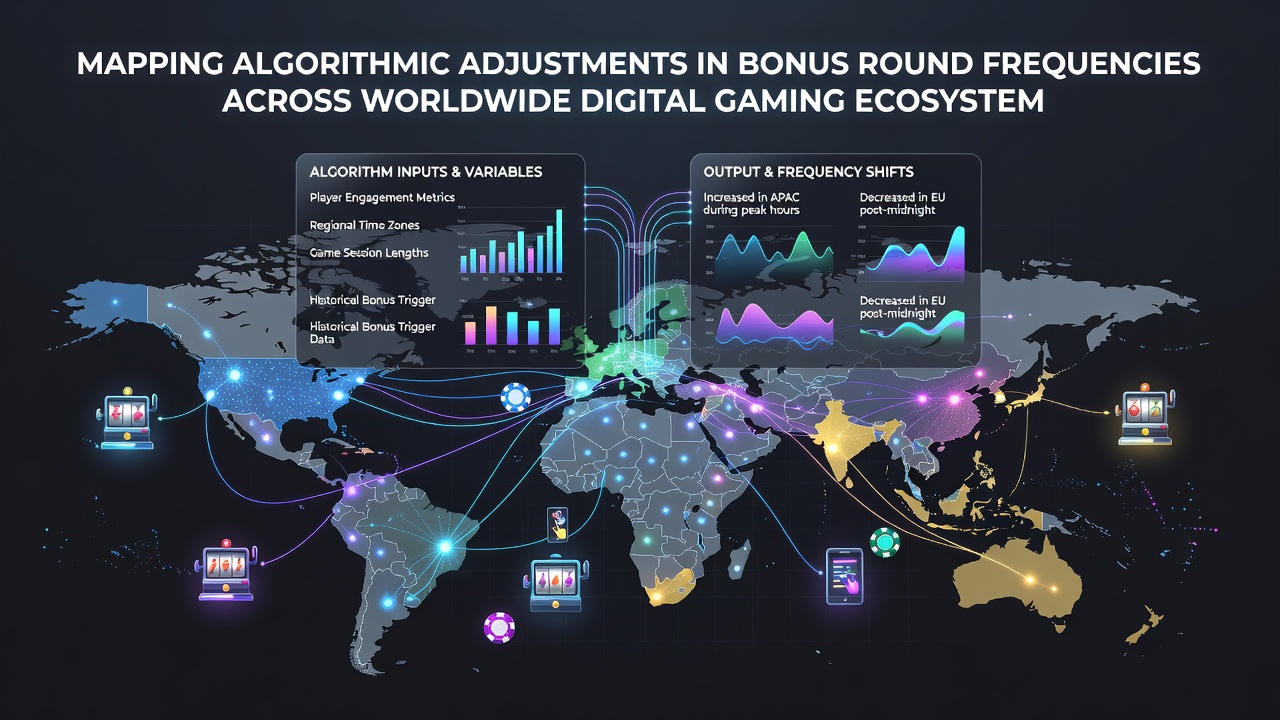
Modern mapping systems rely on layered decision trees that combine historical session data with live regulatory feeds. When a jurisdiction updates its minimum return-to-player thresholds or bonus disclosure requirements, the algorithm recalculates optimal trigger rates and redistributes probability mass across base game symbols and feature entries. Engineers at major suppliers test these recalibrations in isolated sandboxes before deployment, ensuring the new frequencies remain within certified mathematical boundaries.
Multi-jurisdictional operators further segment player pools by device type and connection speed, because mobile sessions often show shorter average play times than desktop sessions. The algorithms account for these differences by increasing bonus round density on mobile profiles in markets where session length data indicates players disengage quickly without frequent features. This segmentation occurs automatically once the system detects a player's device fingerprint and location metadata.
Data Integration Across Global Platforms
Centralized analytics platforms aggregate anonymized telemetry from thousands of casino sites and feed the information back into adjustment engines. According to reports published by the Massachusetts Gaming Commission, average bonus round activation rates across monitored operators shifted between 3.2 percent and 4.1 percent of spins during the first half of 2026, with higher rates observed in titles marketed to newer player segments. Similar datasets from Ontario regulators revealed comparable ranges after algorithmic updates were applied in May and June of that year.
These datasets also track correlations between bonus frequency changes and player retention metrics. When frequencies drop below certain thresholds, operators observe measurable declines in daily active users within specific age cohorts, prompting further fine-tuning that restores engagement without violating local caps. The process repeats at regular intervals as new performance data arrives.
Cross-Border Variations in Implementation
European operators face additional complexity because individual member states maintain distinct certification processes. A game certified in Malta may require separate algorithmic profiles for deployment in Spain or Romania, each with its own bonus frequency tolerances. Developers maintain version control systems that track which profile applies to which license, and automated compliance checks flag any configuration that drifts outside permitted ranges after an update.
Asian markets introduce further variables. Singapore's regulatory framework emphasizes strict session time limits, which influences how frequently bonus rounds are scheduled within shorter play windows. Operators serving those markets often compress feature triggers into the first 50 spins of a session, creating distinct patterns compared with longer-session European profiles.
Future Monitoring and Adjustment Cycles
Industry observers note that July 2026 marks the start of a new quarterly reporting cycle in several North American and Australian jurisdictions. These cycles require operators to submit detailed frequency maps that document every algorithmic change made during the previous three months. The requirement has accelerated adoption of automated logging tools that record each parameter shift along with the regulatory trigger that prompted it.
Academic researchers affiliated with gaming studies programs have begun analyzing teh resulting datasets to identify broader patterns in how algorithmic adjustments propagate across ecosystems. Early findings suggest that changes in one major market often influence configuration decisions in adjacent regions within two to three months, even when those regions operate under different licensing regimes.
Conclusion
Algorithmic mapping of bonus round frequencies continues to evolve as regulatory frameworks and player behavior data intersect across worldwide digital gaming ecosystems. Operators maintain separate profiles for each jurisdiction, update them through automated systems, and document every modification to satisfy expanding compliance obligations. The process produces measurable differences in player experiences depending on location, device, and session characteristics, while central analytics engines ensure adjustments remain within certified mathematical limits. Ongoing quarterly reporting cycles in multiple regions will likely drive further refinements to these mapping systems through the remainder of 2026 and beyond.